Our research

Atoms, molecules
and light.

We prepare ultracold atoms and molecules in optical lattices and tweezer arrays, control their interactions and image them with single-atom resolution. The aim is to understand strongly correlated quantum matter and the interaction of light with ordered atomic systems.

Four research themes.
Eight experiments at MPQ and LMU.

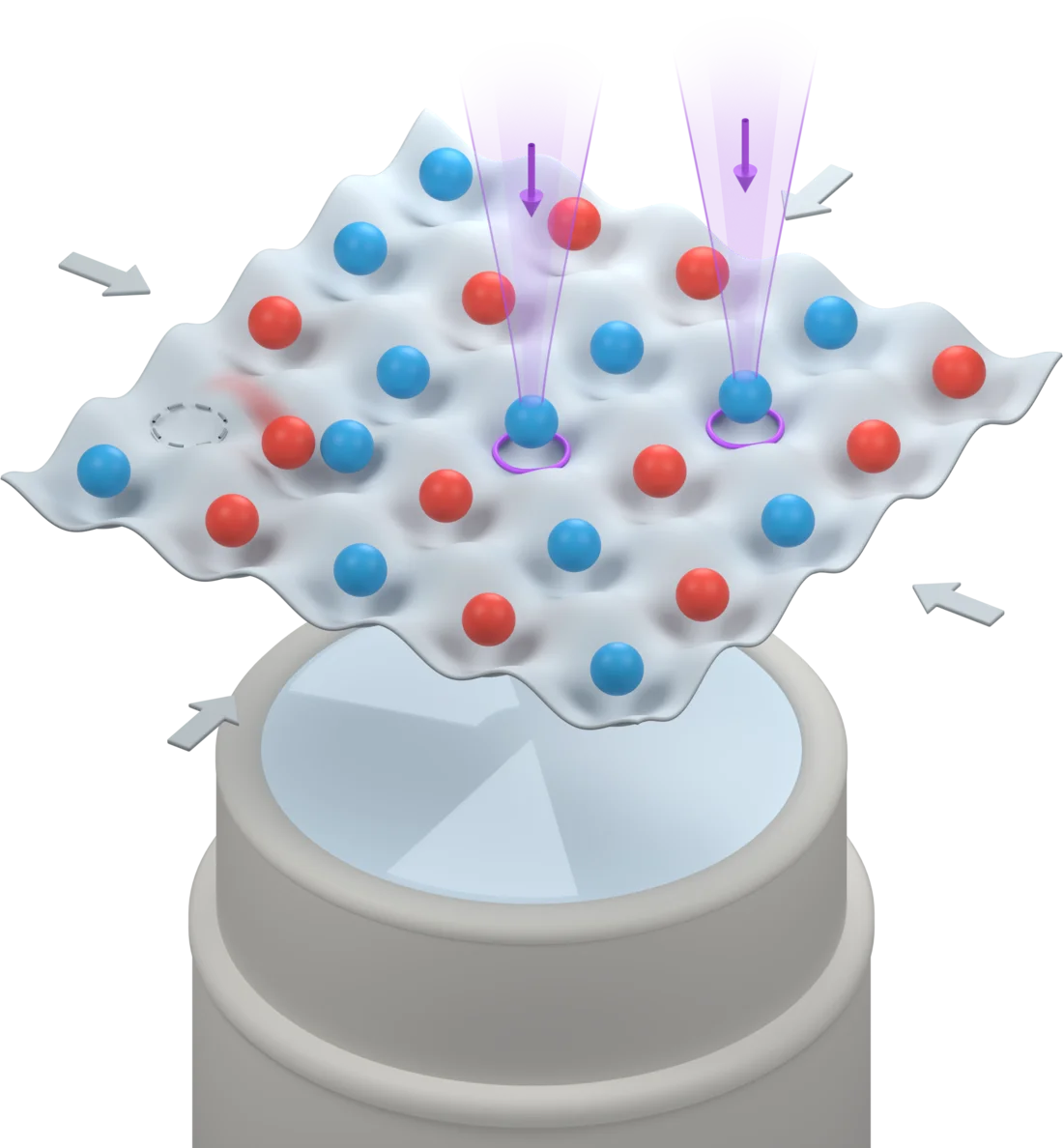
Illustration of a quantum gas microscope: red and blue atoms sit in the wells of a corrugated optical-lattice potential above a microscope objective, and two focused violet beams each address a single atom.
01 / Many-body physics02 / Simulation & computing03 / Quantum optics04 / Dipolar matter

Inside the labs

Our experiments.

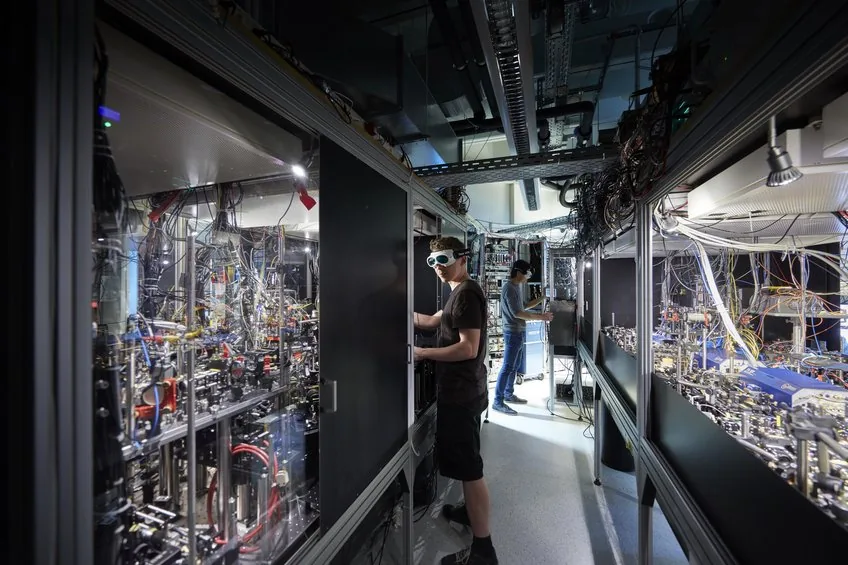
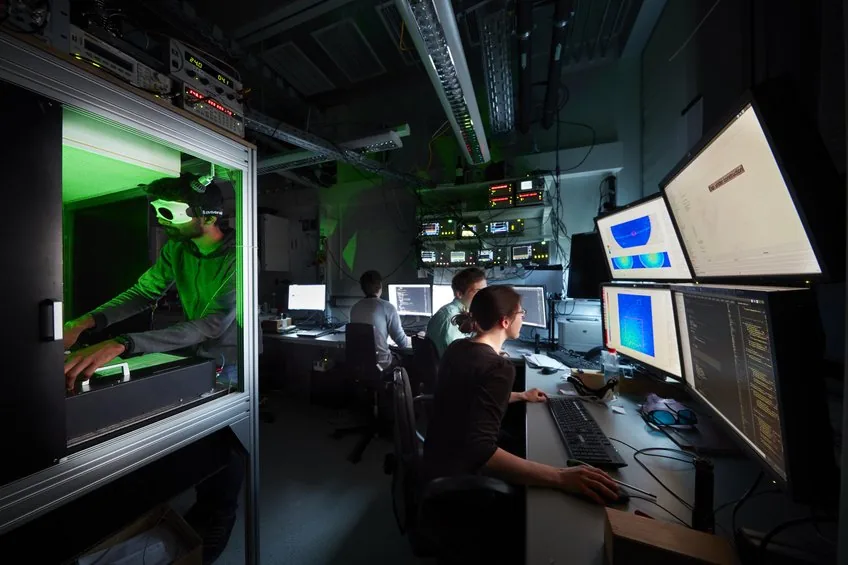
The lithium quantum gas microscope laboratory at MPQ
The lithium quantum gas microscope laboratory at MPQ · Quantum Munich

01 / Quantum many-body physics

Strongly correlated
quantum matter.

We study how collective behaviour emerges from the interactions between individual particles. Quantum gas microscopes resolve single atoms in optical lattices and give direct access to spin and charge correlations in Hubbard models.

Quantum magnetismHubbard modelsNon-equilibrium dynamics
Explore the lithium experiment

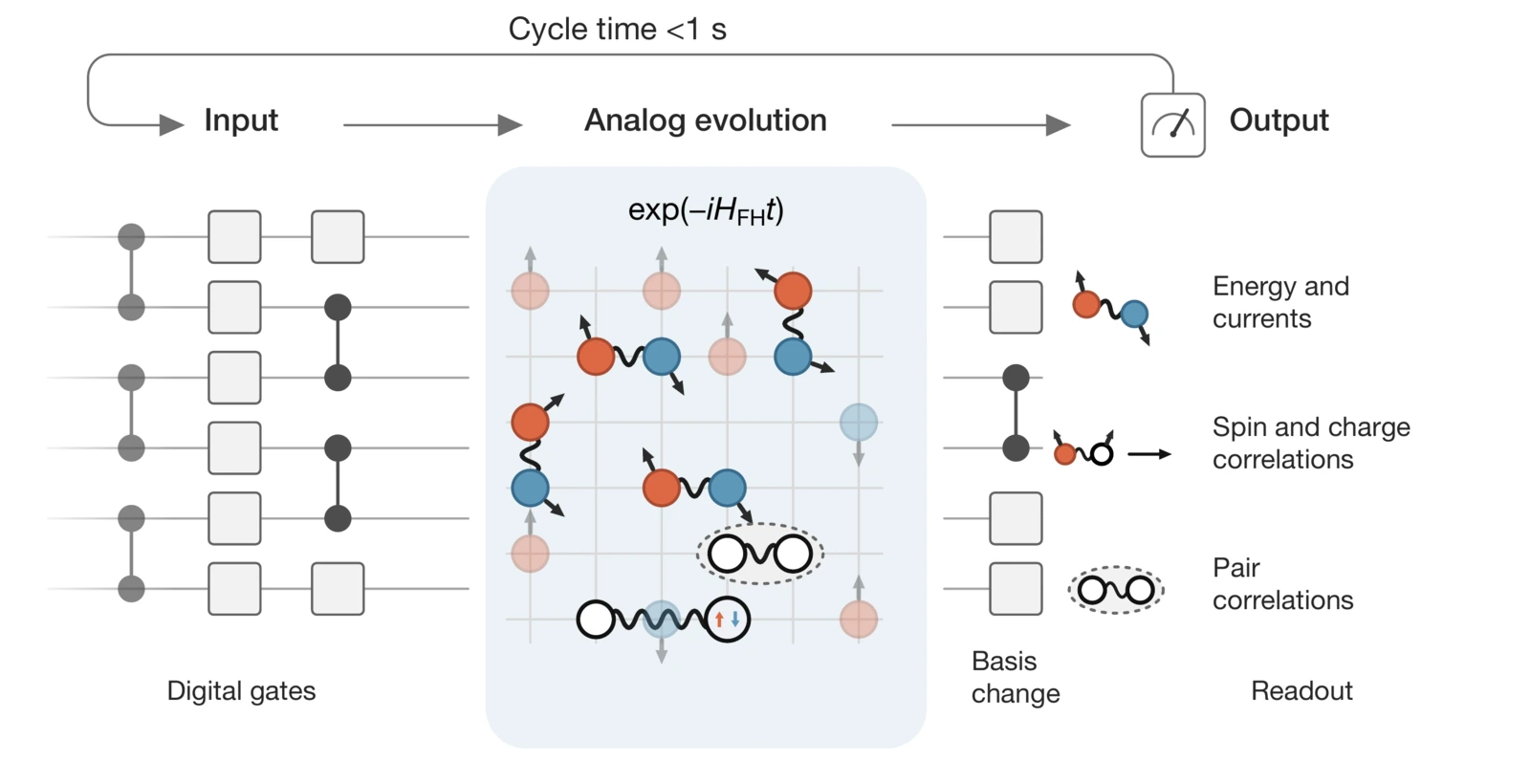
Diagram of a hybrid quantum simulation cycle: digital gates prepare the input, atoms evolve under the Fermi-Hubbard Hamiltonian in an optical lattice, and a basis change before readout gives energy and currents, spin and charge correlations, and pair correlations. The cycle repeats in less than a second.
Hybrid digital-analogue quantum simulation of the Fermi-Hubbard model · Illustration: I. Bloch

02 / Quantum simulation & computing

Programmable quantum
simulators and processors.

Well-controlled atomic systems can address many-body problems that are hard to solve on classical computers. We develop platforms that combine analogue quantum simulation with digital, gate-based quantum computing.

In a hybrid cycle, digital gates prepare the input state, the atoms evolve under the Fermi-Hubbard Hamiltonian, and a basis change before readout gives access to energies and currents, spin and charge correlations, and pair correlations.

Programmable systemsNeutral atomsQuantum information
Discover FermiQP
Rubidium quantum gas microscope at MPQ
Rubidium quantum gas microscope at MPQ · Quantum Munich

03 / Quantum optics

Collective light scattering
by atomic arrays.

Atoms arranged with a spacing below the optical wavelength scatter light collectively. We study how this changes the optical response of the array, from a subradiant atomic mirror to an array switched by a single Rydberg atom.

Subwavelength arraysCollective emissionLight–matter interfaces
Explore quantum optics
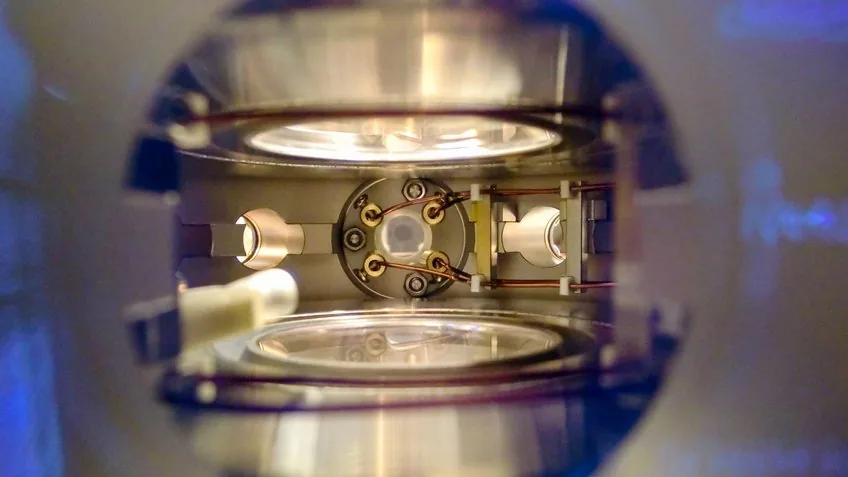
Apparatus for ultracold polar molecules at MPQ
Apparatus for ultracold polar molecules at MPQ · Quantum Munich

04 / Dipolar quantum matter

Interactions that reach
beyond the nearest neighbour.

Ultracold polar molecules bring strong, long-range and anisotropic interactions to quantum gases. In optical lattices they offer routes to spin models and extended Hubbard models with interactions beyond nearest neighbours.

Ultracold moleculesDipolar interactionsQuantum gases
Meet the NaK experiment

A connected research community

Independent groups
and collaborations.

Common methods

Different platforms,
shared techniques.

Our experiments connect these themes through common tools: optical lattices, precise control and atom-resolved observation.

Explore our experiments ↑

Doctoral theses

Dissertations supervised
by Immanuel Bloch.

A full list of doctoral theses is available in the LMU library.

LMU Electronic Theses